
Troubleshooting
How to Reset a Sub-Zero Refrigerator: Every Reset, and What Each One Clears
A Sub-Zero has no single reset button. It has four separate actions people call "the reset": silencing the door alarm, clearing a service reminder, switching the unit off and on at the control panel, and cutting power at the breaker for about five minutes. Work through them in that order — the mildest first — and stop as soon as the unit behaves.
The full guide
First, work out which one you need
The word "reset" is doing four jobs, and using the wrong one is how people end up power-cycling a refrigerator six times to silence a door alarm.
| What is happening | Which reset |
|---|---|
| It is beeping and will not stop | Silence the alarm |
| A message or reminder on the display | Clear the service reminder |
| Controls behaving oddly, display not responding as expected | Off and on at the control panel |
| No response at all, or nothing else has worked | The breaker |
Work down that table, not up it. Each step is more disruptive than the one before, and every one of them is reversible except the information you throw away on the way.
Before you clear anything, photograph the display. A service code, a flashing wrench, a temperature reading — write it down or take a picture. That code is the most useful sentence your refrigerator will ever say, and clearing it before anybody reads it means paying a technician to work out from scratch what the unit had already told you. Our error code index explains what the published ones mean.
Reset 1: silencing the alarm
The mildest one, and it is what most people actually want.
Press the alarm key on the control panel. The sound stops. Nothing else changes.
What triggers it is usually a door that has been open too long, a door that is not quite closing, or a compartment that has drifted out of range. Silencing it does not address any of those — it just stops the noise while you deal with them.
If it comes back within minutes, the condition is still there. Check that the doors are properly closed, that nothing on a shelf is holding one open by a few millimeters, and that the gaskets are seating. If it keeps returning with the doors clearly shut, that is a real symptom rather than an annoyance: see refrigerator beeping.
Reset 2: clearing a service reminder
A reminder is not a diagnosis. It is a timer that has run out — most commonly for the condenser, the water filter or the air cartridge. It knows how long it has been; it has not measured anything.
Do the job first, then clear the reminder. In that order, always. Clearing a condenser reminder without cleaning the condenser is switching off a smoke alarm because it is loud, and the next reminder — the one that might have mattered — arrives to somebody who has learned to ignore them.
- Condenser reminder → clean the condenser, then clear.
- Water filter or air cartridge → change the filter, then clear.
The key sequence for clearing differs by series, and we are not going to print a universal one: a confidently wrong button combination in a guide is worse than no guide. It is in the use and care manual for your model, under the display or service reminder section. If you do not have the manual, tell us the model number and we will tell you the sequence — that is a phone call, not a visit.
A flashing service light or a wrench icon is not a reminder. That is the unit reporting a condition it has detected, and clearing it without finding out what it was is the one genuinely bad move in this whole article. See service light or wrench flashing.
Reset 3: off and on at the control panel
The equivalent of restarting a computer. It clears the control state without cutting power to the whole unit.
- Switch the refrigerator and the freezer off at the control panel — both compartments.
- Wait a few minutes. Not seconds.
- Switch them back on.
The compressor will not start immediately. There is a built-in delay before a compressor is allowed to restart, which exists to stop it being asked to start against system pressure that has not equalized. A unit that stays quiet for several minutes after this is behaving correctly, not failing.
This is the right reset for a display that is not responding as expected, controls that appear stuck, or a compartment setting that will not take.
Reset 4: the breaker
The last one, and the one to do once.
- Find the circuit at the panel. On most installations a built-in refrigerator is on its own circuit; if it is not clearly labeled, that is worth fixing while you are there.
- Switch it off.
- Wait about five minutes.
- Switch it back on.
Five minutes rather than five seconds, for two reasons: the control electronics need long enough to lose their state entirely, and the sealed system needs long enough to equalize before the compressor is asked to start again.
Do not do this repeatedly. A compressor restarted against a system that still has pressure in it is working far harder than it was built to, and repeated power cycling is one of the reliable ways a fixable problem becomes a compressor replacement. One breaker cycle is diagnostic. Six is damage.
If the unit does not behave after one, the answer is not another one.
After any reset: check it actually held
A refrigerator that lights up is not a refrigerator that is cooling. Give it several hours, then read an actual temperature — a glass of water left in the compartment with a thermometer in it beats an opinion formed with the back of your hand.
Two questions, both worth answering:
- Does the compressor now stop? A compressor that never shuts off is not fixed, whatever the display says.
- Is the compartment coming down to where it should be? Not "cooler than it was" — where it should be.
What a reset will never fix
Worth being explicit, because this is where the reset habit costs people money. A reset clears a state. It does not repair anything. If the underlying condition is physical, the symptom will come back, and every cycle in between is wear.
A reset will not fix:
- A stopped evaporator fan. The cold is being made and not moved.
- A frosted evaporator coil. Ice does not clear because the controls restarted.
- A refrigerant leak. See refrigerant leaking from a refrigerator.
- A blocked condenser. That needs a vacuum, not a breaker.
- A failed door gasket. Nothing electronic is involved.
- A control board that has actually failed. A reset restarts a board that works; it does not revive one that does not. See control board repair.
One local note worth knowing. After a South Florida storm, the reset that gets asked for most is the breaker one — and the reason the unit needs it is usually the restoration surge rather than the outage. If your unit came back from an outage behaving strangely, try one control panel reset and one breaker cycle, and then stop. Repeated cycling of a board that has already taken a surge is how an intermittent problem becomes a permanent one.
There is more on the outage side in not cooling after a power outage.
When to stop resetting and call
Stop and book somebody if any of these is true:
- The problem returns after one full breaker cycle
- There is a service code you have not cleared and do not understand
- The compressor never stops, or never starts
- The compartment does not come back to temperature within several hours
- Anything is making a noise it did not make before
Tell us the model number and — this is the useful part — what was on the display before you reset it. That one detail regularly turns two visits into one, because it decides what goes on the van. It is also the reason for the photograph at the top of this page.
If it turns out to be a repair
What this leads to, and what it costs
Every job on this site is priced the same way: an on-site diagnostic first, the figure agreed in writing before anybody starts.
-
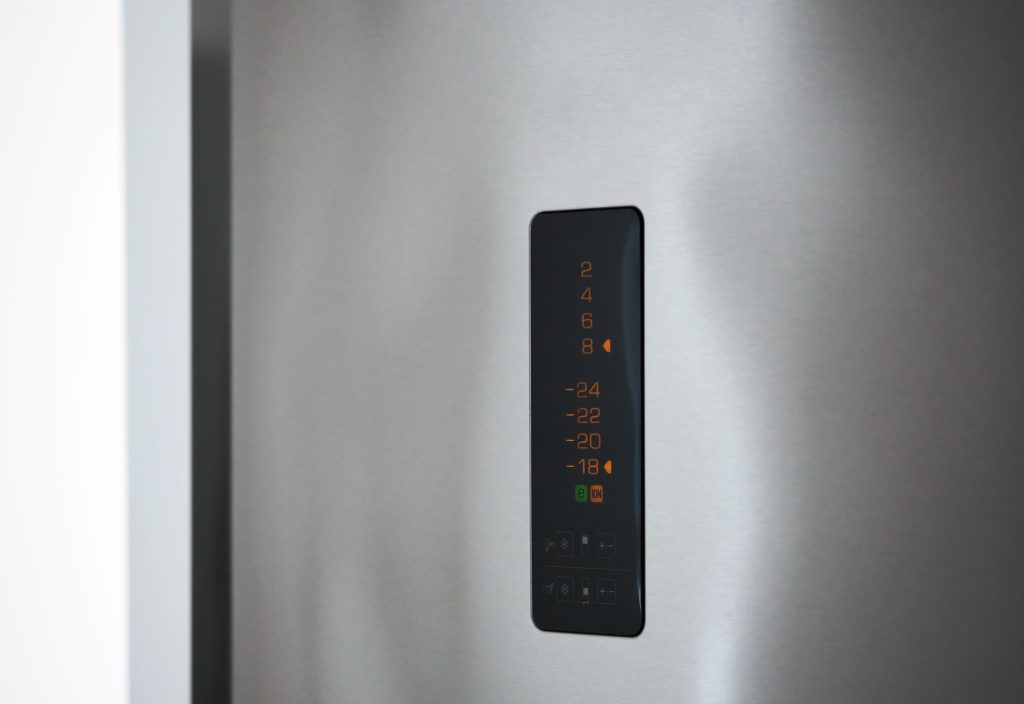
The display asking for attention Service light or wrench flashing
A service light, a wrench symbol or a unit that beeps without any obvious change in temperature. What it means, why the code behind it matters, and what to do first.
- Light on, temperatures look normal
- Wrench symbol with no code shown
- Beeping that returns after a reset
-
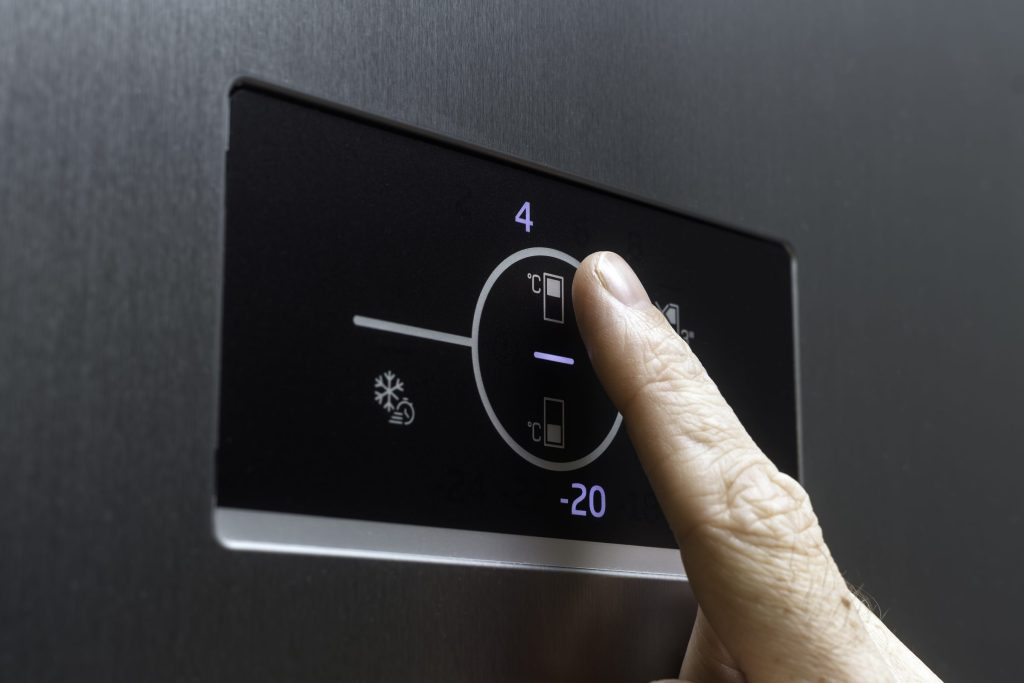
Alarm, not failure Refrigerator beeping
A unit beeping steadily or intermittently, with or without a light. Usually a door or a temperature alarm — and occasionally the first sign of something worth catching early.
- Beeps that stop when the door is pushed
- Beeping that returns after a reset
- Alarm with temperatures that look normal
-

from $450 Control board repair
Boards vary sharply by series, and parts for legacy units can take a few days to source. We confirm the board is the problem before ordering one — a code on the display is not proof by itself.
- Board confirmed before it is ordered
- Legacy 600 and 700 Series supported
- Display and touch panel problems
-
from $95 Diagnostic visit
We read the active and stored codes on site, then test the sealed system and the airflow before saying anything about the repair. The fee is credited toward the work when you go ahead.
- Active and stored codes read on site
- Sealed system and airflow tested
- Credited toward the repair

Questions people ask about this
Where is the reset button on a Sub-Zero refrigerator?
There is not one, and looking for it is the reason this question is asked so often. What exists instead is a control panel that can turn the unit off and on, a way to silence the alarm, a way to clear service reminders, and the breaker. Those four cover everything a reset button would do.
How long should I leave the power off?
About five minutes. Long enough for the control electronics to lose their state, and long enough that the compressor is not asked to restart against a system still under pressure. Ten seconds achieves neither.
Will a reset erase the service codes?
It can clear what is showing, and that is a reason to be careful with it. Write down or photograph any code before you clear anything. A code is the most useful sentence your refrigerator will ever say to you, and clearing it before anybody reads it means paying somebody to work it out again.
The problem comes back after every reset. What does that mean?
That the reset is not fixing anything. A reset clears a state; it does not repair a part. Something that returns within hours or days is a real problem that keeps re-triggering the same condition, and repeated power cycling is one of the ways it gets more expensive.
Troubleshooting
More guides like this one
-

Sub-Zero Ice Maker Not Making Ice: the Checks to Run Before You Book Anyone
A good share of these end without anybody coming out. Seven checks in about twenty minutes, in the order that eliminates the most for the least effort — and the three findings that mean stop and call.
Read more -

Sub-Zero Door or Drawer Not Closing: Six Checks, in Order
The order matters more than the list. Start with the two checks that cost nothing — what is on the shelf, and whether the unit is level — because between them they account for most of the doors we are called out to look at.
Read more -

Sub-Zero Condenser Fan Not Running: What to Check Before Anyone Comes Out
The condenser fan is reachable from the front through the grille, which makes this one of the few checks an owner can genuinely complete. It is also the fastest route from a modest repair to a compressor, which is why it is worth an evening.
Read more
Tell us the model number and what it is doing.
This article is based on:
- Official manufacturer documentation
- Internal repair procedures
- Technician repair history
- Company quality standards