Maintenance & Prevention
What to Set a Sub-Zero To, and Why Your Food Keeps Freezing
Set the refrigerator to 38°F and the freezer to 0°F. Those two figures suit almost every household and match food safety guidance, which asks for the refrigerator at or below 40°F. If food is freezing in the refrigerator at 38°F, the setting is not the problem — items are sitting in the path of the cold air outlet, or against the back wall. Move them rather than raising the temperature.
The full guide
The two numbers
Refrigerator: 38°F. Freezer: 0°F.
That is the whole answer for almost every household, and it is worth knowing why those two rather than any others.
Food safety guidance asks for a refrigerator at or below 40°F, because that is where bacterial growth slows to a rate that keeps food safe for the times we expect. Setting exactly 40 leaves no margin: every door opening, every bag of warm groceries, every hot dish put in to cool pushes the compartment above it for a while.
Setting 38 gives you that margin without going so cold that you start freezing things at the back. Below about 36, produce near the air outlet begins to freeze and you have gained nothing in safety.
0°F for the freezer is the standard figure for long-term frozen storage. Colder does not keep food better in any way you will notice; it just adds runtime.
Why your food is freezing anyway
This is the single most common complaint about a correctly set refrigerator, and the answer surprises people: the number on the display is an average, and your lettuce is not sitting in the average.
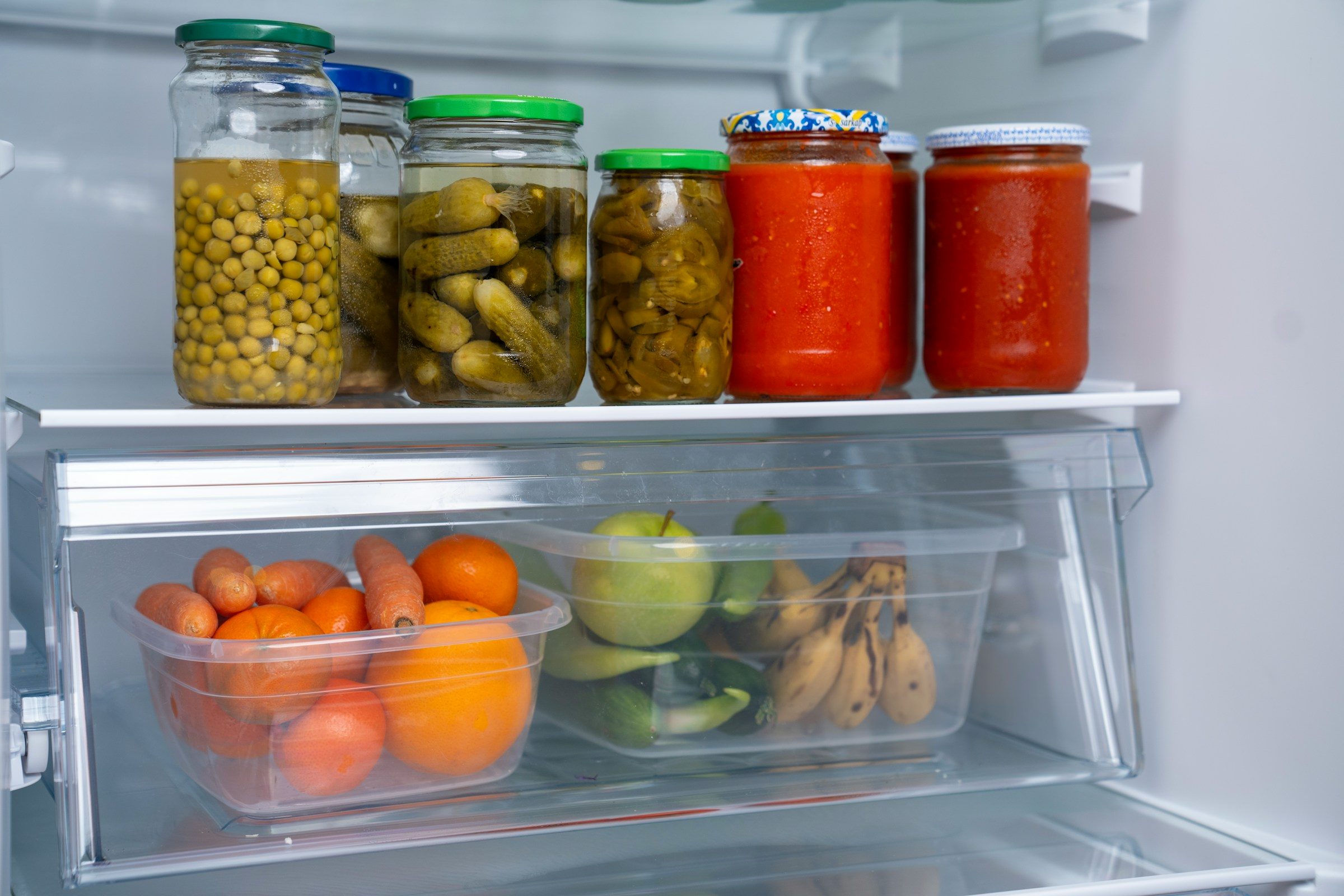
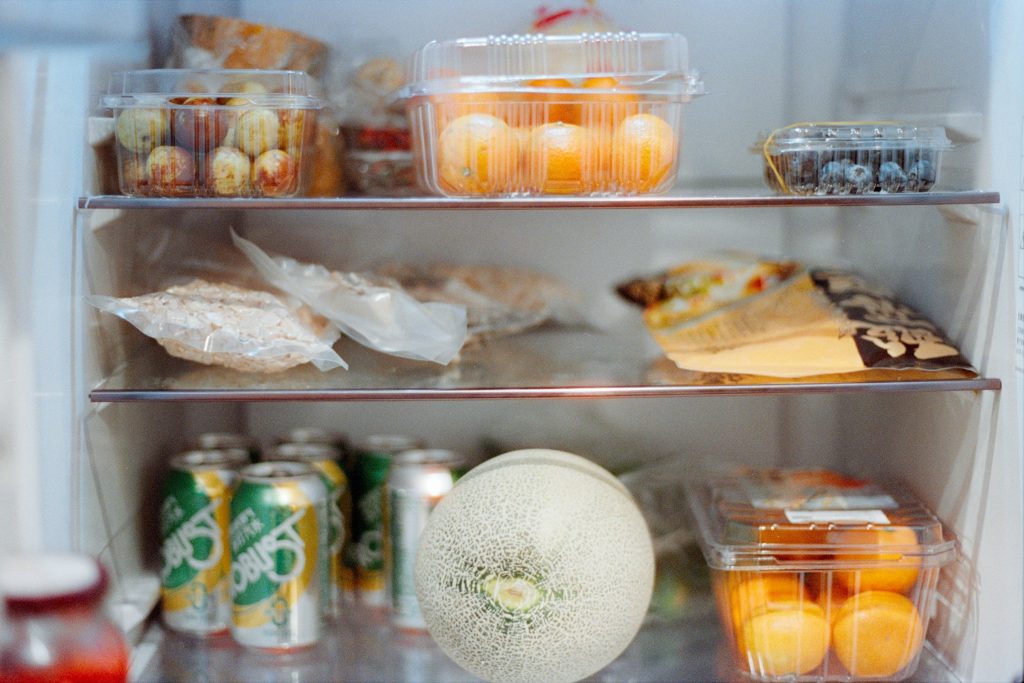
Cold air arrives in the compartment through an outlet — usually at the back, often at the top. Air leaving that outlet is substantially colder than the compartment target, because it has to be in order to bring the whole cabinet down to it. Anything sitting directly in that stream, or pressed flat against the back wall, sits several degrees below what the display says.
So the milk at the back freezes, the eggs on the door are fine, and the display reads 38 the whole time. Nothing is wrong with the machine.
What to do:
- Find the air outlet — hold your hand near the back wall and top of the compartment with the fan running and you will feel it
- Move anything freezable out of the direct stream: milk, eggs, leafy greens, anything with high water content
- Leave a gap between food and the back wall rather than pushing containers flush against it
- Keep the crisper drawers reasonably full — they hold humidity and buffer temperature
- Do not block the outlet with a large flat item like a baking tray or a platter
Do not solve this by raising the temperature. It is the intuitive move and it is the wrong one. Setting the refrigerator to 41 or 42 to stop the lettuce freezing pushes the whole cabinet — including everything that matters for food safety — above the 40°F line, to solve a problem that was three inches wide. Move the food.
Wait a day before judging
A refrigerator full of food has a large thermal mass, and it moves slowly. Give any change 24 hours before deciding it did not work.
The failure mode here is a loop that a lot of households have been round more than once: adjust, check an hour later, see nothing, adjust further, come back the next day to find everything frozen, adjust hard in the other direction, and spend a week oscillating. Change it once. Wait a day. Then judge.
Colder is not harder-working
Worth stating plainly because the intuition runs the other way.
The setting is a target, not an effort level. A refrigerator does not work harder because you asked for a lower number — it works exactly as hard as it needs to in order to reach whatever target it has, and then it stops.
So setting a unit colder in summer does not help it cope with a hot kitchen. It just lowers the target, which means more runtime, more frost, and frozen produce. If a unit genuinely cannot hold 38°F in August, that is a maintenance or capacity problem and the answer is a clean condenser and a technician, not a dial.
There is one honest local caveat. In a Miami kitchen in August, with the ambient high and the doors opening often, a refrigerator will recover more slowly after each opening than it would in a cooler climate, and it will run a good deal more of the time. That is normal. What is not normal is a unit that never reaches its target at all, or one that has stopped cycling entirely — that is the point at which the summer explanation stops covering it.
What each compartment is actually for
A short digression that answers a surprising number of the questions we get asked on site.
Many of these units run two entirely separate refrigeration systems rather than one — separate sealed circuits and separate evaporators for the refrigerator and the freezer, so the compartments never share air.
That has two consequences worth knowing:
Food keeps better and dries out less, because the refrigerator is not being fed dry air that has passed over a freezer coil. This is the main reason for the design.
The two compartments fail independently. A freezer that is fine while the refrigerator is warm is a specific and useful symptom on a dual system, because it eliminates everything the two share. It is also the reason the refrigerator is warm and the freezer is fine has a guide of its own.
Wine, briefly
If your unit includes wine storage, the number matters less than the steadiness.
Most collections sit somewhere in the mid-fifties Fahrenheit. A dual-zone cabinet will hold a warmer zone for reds and a cooler one for whites and sparkling, and the exact figures are a matter of preference within a fairly forgiving band.
What a wine cabinet costs to put right when it stops holding that temperature is in what a wine cabinet repair costs.
What is not forgiving is variation. Wine is damaged far more by repeated swings — which work the cork and draw air in — than by sitting a degree or two off an ideal. A cabinet that holds 57 steadily is doing better by the wine than one that averages 55 while cycling between 51 and 59.
When the setting is not the problem
Change the setting once, wait a day, and if the reading has not followed, stop adjusting. At that point the number on the display is not the issue. Look at:
- The condenser. A unit that cannot reach its target most often cannot shed its heat.
- The seals. A door letting a stream of humid air in is a target that keeps moving away.
- What is blocking the airflow. An overfilled cabinet, or a large item across the air outlet.
- Whether it is cycling at all. A compressor that never stops is a unit that never reaches target — the display can read 38 while the machine is working continuously to hold it.
And one thing that is worth doing before any of that: put an independent thermometer in a glass of water in the middle of the compartment and leave it overnight. That reading is the truth. A display that disagrees with it by several degrees is telling you about a sensor, which is a modest repair and a very common one — and considerably cheaper than the assumptions people make when the food is freezing and the display insists everything is fine.
If it turns out to be a repair
What this leads to, and what it costs
Every job on this site is priced the same way: an on-site diagnostic first, the figure agreed in writing before anybody starts.
-
The most common call Refrigerator not cooling
A cabinet that runs warm, cools unevenly, or holds temperature overnight and not by day. Five ordinary causes, hundreds of dollars apart — and how to tell which one you are looking at.
- Warm on one side, fine on the other
- Holds overnight, drifts by day
- Compressor running far longer than it used to
-
Priced after diagnosis Maintenance visit
In this climate condenser cleaning is seasonal rather than annual. A maintenance visit is the cheapest hour you will spend on a built-in unit, and it is how most sealed system failures get avoided.
- Condenser cleaned and airflow checked
- Door seals and drainage inspected
- Stored codes read and cleared
-
from $95 Diagnostic visit
We read the active and stored codes on site, then test the sealed system and the airflow before saying anything about the repair. The fee is credited toward the work when you go ahead.
- Active and stored codes read on site
- Sealed system and airflow tested
- Credited toward the repair
Questions people ask about this
What should a Sub-Zero refrigerator be set at?
38°F for the refrigerator and 0°F for the freezer. Food safety guidance asks for the refrigerator at or below 40°F, and 38 gives you a margin for door openings and warm groceries without pushing items near the air outlet into freezing. There is very little reason to run colder: below about 36 you start freezing produce without gaining any meaningful safety.
Why does my refrigerator keep freezing my food?
Usually because of where the food is, not what the dial says. Cold air enters the compartment through an outlet, and anything sitting directly in that stream — or pressed against the back wall — sits several degrees colder than the rest of the cabinet. Lettuce, milk and eggs in that spot freeze while the compartment average is a perfectly correct 38°F. Move the items before you change the setting.
How long should I wait after changing the temperature?
A full 24 hours. A refrigerator full of food has a large thermal mass and it moves slowly. The common mistake is to adjust, check after an hour, see no change, adjust further, and end up several degrees past where you wanted to be — then repeat in the other direction. Change it once, wait a day, then judge.
Should I set it colder in summer?
No. The setting is a target, not an effort level — the unit works as hard as it needs to in order to hold it, and setting it colder does not help it cope with a hot kitchen. What it does is add runtime and freeze the produce. If the unit cannot hold its target in summer, that is a capacity or maintenance problem, and a dirty condenser is the first place to look.
How cold should a wine cabinet be?
Most collections sit somewhere in the mid-fifties Fahrenheit, with a dual-zone cabinet holding a warmer zone for reds and a cooler one for whites and sparkling. What matters more than the exact figure is stability: wine is damaged less by a degree or two either way than by repeated swings, which work the cork and let air in.
Maintenance & Prevention
More guides like this one
-

Sub-Zero Water and Air Filters: When to Change Them and How to Clear the Reminder
Two filters, two schedules, two different resets — and people confuse them constantly. What each one does, when it is actually due, and why the indicator light is not measuring anything.
Read more -

Sub-Zero Door Gaskets: How to Clean Them, Test Them and Know When They Are Done
The gasket is the cheapest part on the machine and the one whose failure costs the most, because everything downstream of a poor seal is a bigger repair. Here is how to keep one alive, and how to tell when keeping it alive is no longer the answer.
Read more -
How to Clean a Sub-Zero Condenser, and How Often to Do It in South Florida
Twenty minutes, twice a year, no tools you do not already own. The one piece of maintenance that prevents more expensive repairs than everything else combined — and why the interval in the manual is too long for this market.
Read more
Tell us the model number and what it is doing.
This article is based on:
- Official manufacturer documentation
- Internal repair procedures
- Technician repair history
- Company quality standards