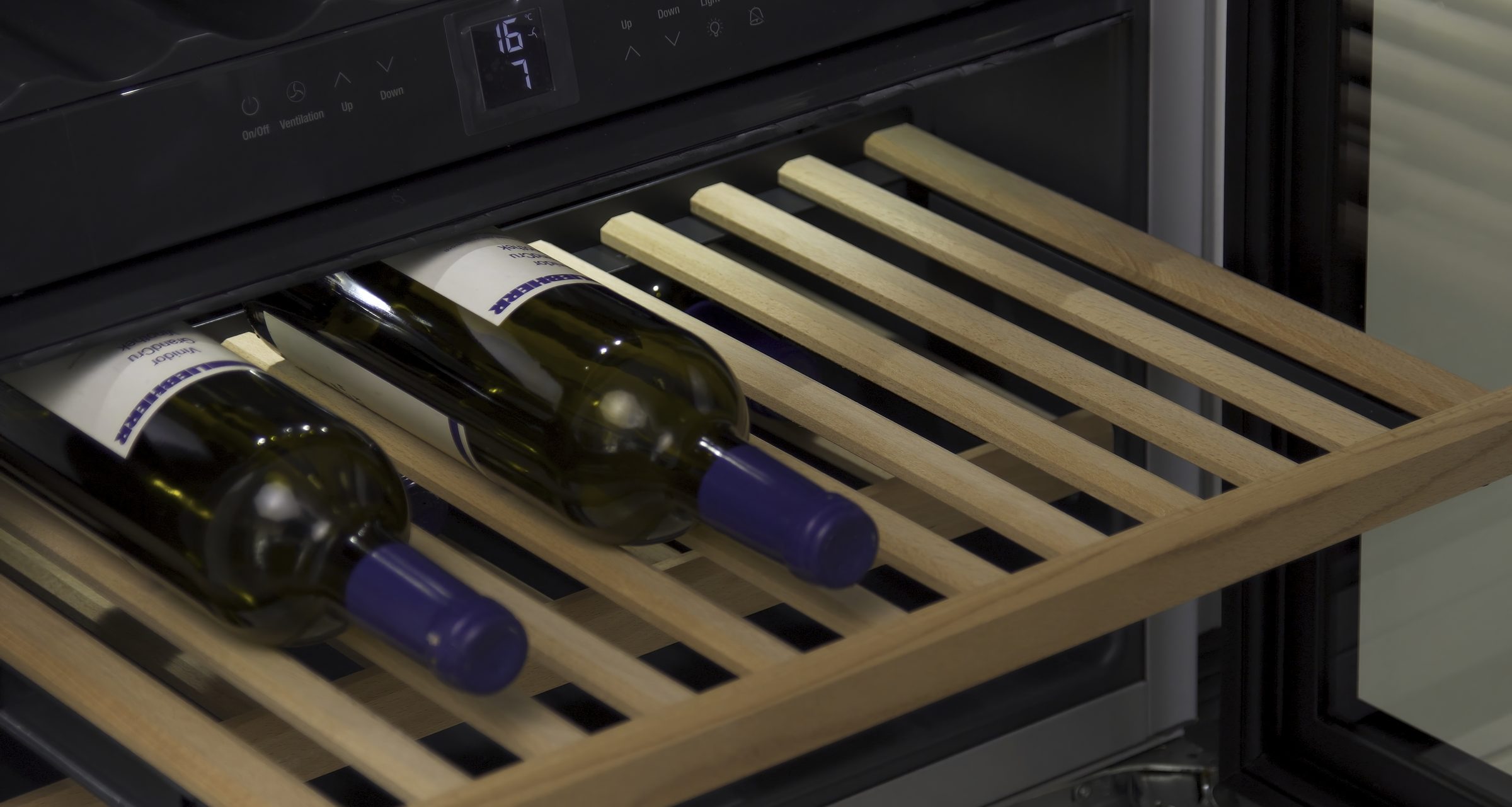
- “One zone off, the other fine”
- “Humidity changed before temperature did”
- “Corks and labels showing it first”
Symptom
Sub-Zero wine cabinet not holding temperature
A zone reading two or three degrees off, humidity that has changed, or a cabinet that holds by night and drifts by day. Wine storage fails quietly, which is what makes it expensive.
- From $95 diagnostic, credited to the repair
- 59 cities and neighborhoods covered
- OEM parts available on order
- In writing the price, before anything is opened
Five ordinary causes
What this usually turns out to be
Cheapest and commonest first, which is also the order we check them in. They sit hundreds of dollars apart, and only the unit settles which one is yours.
-
A condenser working against heat it cannot shed
The first thing to check in this climate, and the cheapest thing on the list to be right about.
Condenser fan and coil service from $280 -
A zone sensor reading wrong
Put a thermometer inside and compare it with what the display claims. A cabinet holding a temperature that is not the one shown is the quiet failure this equipment is known for.
Control board repair from $450 -
Door seals and glass heaters
Particularly on units in a warm room. A glass door has a heater in it for a reason, and when it stops the seal has to do work it was never asked to do.
Door gasket replacement from $220 -
Vibration
It matters here in a way it does not in a refrigerator. A cabinet that has developed a buzz is worth looking at for the collection's sake as much as the appliance's.
Condenser fan and coil service from $280 -
The sealed system
Reached last, after the rest are ruled out. On a zone that has drifted for a season rather than a week, it moves up the list.
Sealed system repair from $1,200
In five minutes
Before you call anybody
None of it needs tools, and all of it makes the visit shorter.
-
01
Put a thermometer inside
And compare it with what the display claims. A cabinet holding a temperature that is not the one shown is the quiet failure this equipment is known for.
-
02
Look at the condenser through the grille
In this climate it is the first thing to check and the cheapest thing to be right about.
-
03
Note whether one zone or both
On a multi-zone cabinet that difference points at a sensor rather than at the system, and it decides what a technician brings.
-
04
Then book the visit
Say how long the drift has been going on. A season of it is a different conversation from a week of it, and the collection is usually the reason.
How it shows up
What people describe when they call
A shortcut
Narrow it down before anybody arrives
A description of the behaviour leaves a few possible causes. A code names the subsystem before anybody opens anything, which is why it is worth photographing before it clears.
If the display is showing something
Photograph it before it clears — codes do not wait. Search the full code list
In more detail
About Sub-Zero wine cabinet not holding temperature
The fastest diagnosis is the code
EC codes on wine storage name the zone and the condition, which is far faster than describing a drift. If the display shows one, photograph it before it clears.
Quiet failure is the problem
A refrigerator that stops is obvious within a day. A wine cabinet drifts a couple of degrees, holds there, and says nothing — and in a market full of second homes that can run for a season. By the time anybody notices, the collection has paid for the delay.
What it usually is
- A condenser working against heat it cannot shed, which in this climate is the first thing to check
- A zone sensor reading wrong, so the cabinet is holding a temperature that is not the one shown
- Door seals and glass heaters, particularly on units in a warm room
- Vibration, which matters here in a way it does not in a refrigerator
This article is based on:
- Official manufacturer documentation
- Internal repair procedures
- Technician repair history
- Company quality standards
Before you book
Questions about Sub-Zero wine cabinet not holding temperature
Two degrees off does not sound serious.
It is, over a season. A wine cabinet drifts quietly and holds there, and in a market full of second homes nobody notices until the collection has paid for it.
How do I check it myself?
Put a thermometer inside and compare it against what the display claims. A sensor reading wrong is exactly the case where the two disagree.
One zone only?
That narrows it usefully — a zone sensor or that zone's airflow, rather than anything shared by the whole cabinet.
Where we do it
Across Miami-Dade, Broward, and Palm Beach
Same terms everywhere we go: an on-site diagnostic first, the price agreed in writing, and the exact figure confirmed once we have seen the unit.
Neighborhoods people ask for by name