Safety & Risks
Breakers, Surge Protectors and Dedicated Circuits: Powering a Sub-Zero Safely
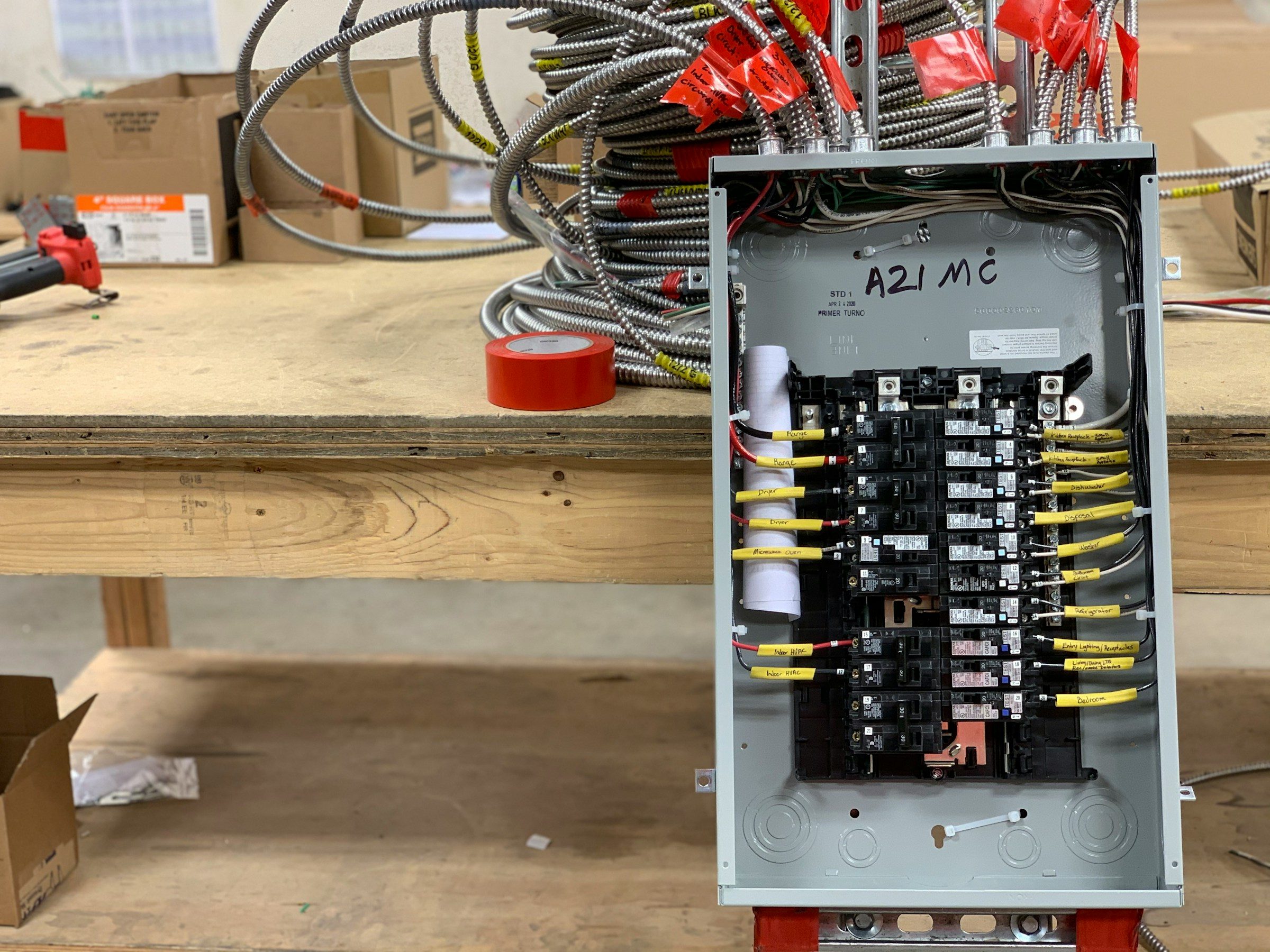
A refrigerator that trips a breaker is either drawing more current than it should — usually a failing compressor start component or a motor — or is sharing a circuit that is overloaded. A built-in refrigerator should be on its own dedicated circuit, plugged directly into a receptacle with no extension cord or power strip. A surge protector rated for a refrigerator is worth having in a lightning-prone area; a standard power strip is not one.
The full guide
The symptom that is not always the appliance
Nearly everything else on this site is a refrigeration problem. This one might not be a refrigerator problem at all — it might be the circuit it is plugged into, and telling those apart before anybody starts replacing parts saves real money.
That is the first thing worth knowing about a breaker that keeps tripping. The second is that the advice you will find for it online is written for a freestanding refrigerator plugged into a kitchen outlet, which is not what a built-in is or how it is wired.
When it trips tells you a great deal
Before anything else, notice the timing. It narrows the cause more effectively than any test you could run yourself.
| When it trips | What that usually points at |
|---|---|
| The moment the compressor tries to start | Start components, or a circuit with no headroom for the surge |
| At apparently random times | Current leaking to ground — motor winding, heater, or wiring |
| During or just after a defrost cycle | The defrost heater has gone to ground |
| When something else in the kitchen is switched on | A shared circuit that is overloaded |
| Only during storms or after outages | Supply-side events rather than the appliance |
That last row is worth pausing on locally: a breaker that only trips during a summer storm is often reporting on the grid, not on your refrigerator.
What a refrigerator asks of a circuit
A refrigerator's running current is modest. Its starting current is not.
Every time the compressor starts, it draws a surge several times its running draw for a fraction of a second while the motor gets moving. That happens many times a day, every day, for decades. It is the defining electrical characteristic of the appliance and it is the reason the rules below exist.
A dedicated circuit. The refrigerator should be the only thing on it. On a shared circuit, that startup surge lands on top of whatever else is drawing at that moment, and the breaker does what a breaker is for. Nuisance trips are the mild outcome. The bad outcome is the one nobody notices: the breaker goes at nine in the morning, the refrigerator is off all day, and the first anyone knows is the smell when they get home.
A direct connection to a receptacle. No extension cord, no power strip, nothing daisy-chained.
Enough capacity, not just enough for the label. This is a conversation for an electrician, not for us, and it is worth having if the trips began after a kitchen was renovated.
Extension cords and power strips are a genuine hazard here, not a technicality. Every extra connection in a circuit carrying a heavy repeated surge is a point of resistance, and resistance under that current means heat at that point. It is a recurring cause of the burning smells we get called out for, and it is entirely avoidable. A refrigerator goes into a wall receptacle, directly, and nothing else shares it.
The appliance side: what actually trips a breaker
If the circuit is sound and dedicated, the appliance is drawing current it should not be. In rough order of how often we find each:
Compressor start components. The relay and capacitor that get the compressor moving. When one fails, the compressor tries to start, cannot, and sits there drawing locked-rotor current until something gives — usually the breaker, sometimes an internal overload protector. The signature is a trip that happens at the moment of a start attempt, often with a click a few minutes beforehand.
A motor going to ground. A condenser or evaporator fan whose winding insulation has broken down. This one frequently arrives with a burning or electrical smell, and it is often preceded by weeks of squealing.
The defrost heater. It is an element that gets hot several times a day, in a damp environment, for years. When it fails to ground, the trip happens during the defrost cycle — which is why this one looks random until somebody notices it happens every six or eight hours.
Moisture where it should not be. A leak that has found a connection or a terminal block. This is where a leak and this one meet, and it is a good reason not to leave one.
A trip is not the appliance being difficult — it is a safety device doing its job. The wrong response is to reset it repeatedly and hope, and the very wrong response is to fit a larger breaker so it stops tripping. The breaker is sized for the wiring behind it, not for the appliance in front of it. Making it bigger removes the protection without fixing anything.
GFCI, and why yours might be switching your refrigerator off
Whether a refrigerator should be on a GFCI — the outlet that cuts power the instant it detects current leaking to ground — depends on where it is and on what the code required when the kitchen was wired — and the answer has changed over time, and differs between a kitchen, a garage, a bar area and an outdoor kitchen. That is an electrician's question and we will not pretend otherwise.
What matters practically is this: a GFCI can trip and leave your refrigerator off silently. It is designed to be sensitive. If yours is protected by one, know where the reset is, and check it after any storm or power event.
We have been called out to more than one refrigerator that was not cooling, on a unit in perfect health, with a tripped GFCI in a cabinet three feet away that nobody had thought to look at.
Surge protection, and why storm season settles the argument
In much of the country, whether to put a refrigerator on a surge protector is a matter of taste. Here it is not really.
Florida gets more lightning than any other state — the densest strike counts are in the central corridor rather than down here, but South Florida is well inside that band — and the summer storm pattern means repeated power events every year — not just outages, but the sags, spikes and rapid restarts that come with them. The electronics in a modern built-in refrigerator are what pay for that.
Two things are worth having:
A surge protector made for refrigeration. Not a desk power strip — those add exactly the connection problems described above and are not built for this load. Purpose-made refrigerator surge protectors exist, they plug in between the wall and the appliance, and they are cheap set against a control board.
A restart delay. Better refrigeration surge protectors include one. When power returns after an outage, it stops the compressor from trying to restart immediately against the system pressure that has not equalized yet. That single feature prevents a meaningful share of the post-outage failures we see, and it is the reason to buy the appliance-specific device rather than the generic one.
The pattern is predictable enough that we can almost put dates on it. Every year, in the weeks after the first serious storms, we get a run of calls about units that will not start, panels that are blank, and boards that have stopped talking to the rest of the machine. Almost none of those households had surge protection on the refrigerator, and almost all of them had it on the television.
What to do, in order
- Do not keep resetting it. A breaker that trips repeatedly is reporting a real condition, and each reset puts the circuit back into it.
- Work out the timing. At startup, at random, during defrost, or when something else switches on. Write down what you notice.
- Check what else is on the circuit. Switch the breaker off and see what else goes dead. If anything does, the refrigerator is not on a dedicated circuit and that alone may be the answer.
- Look at the plug and the outlet. Discoloration, browning, warmth, or a scorch mark moves this out of appliance territory and into electrician territory immediately.
- Remove any extension cord or power strip, permanently, whatever else you find.
- Then call. Bring the timing with you — it is the most useful sentence you can offer.
Where the line is between us and an electrician
Worth being clear about, because it saves everybody a wasted visit.
Ours: the compressor and its start components, the fans, the defrost heater, the control board, the wiring inside the appliance, and diagnosing which of those is drawing current it should not.
An electrician's: the circuit, the breaker, the receptacle, whether the refrigerator has a dedicated line, and anything discolored or warm at the wall.
If we find the problem is on their side of that line, we will say so — and a report of what we measured is useful for them to have. What is not useful to anybody is replacing a compressor on a unit whose real problem is a receptacle that has been running hot for two years.
If it turns out to be a repair
What this leads to, and what it costs
Every job on this site is priced the same way: an on-site diagnostic first, the figure agreed in writing before anybody starts.
-

from $450 Control board repair
Boards vary sharply by series, and parts for legacy units can take a few days to source. We confirm the board is the problem before ordering one — a code on the display is not proof by itself.
- Board confirmed before it is ordered
- Legacy 600 and 700 Series supported
- Display and touch panel problems
-

Storm season Not cooling after a power outage
A unit that came back up and never quite recovered, or did not restart at all. What a surge does to this equipment, and what is worth checking before booking.
- Restarted, but never came back to temperature
- Ice maker at half production since
- Display blank, or a code that arrived with the storm
-
from $95 Diagnostic visit
We read the active and stored codes on site, then test the sealed system and the airflow before saying anything about the repair. The fee is credited toward the work when you go ahead.
- Active and stored codes read on site
- Sealed system and airflow tested
- Credited toward the repair

Questions people ask about this
Why does my refrigerator keep tripping the breaker?
Either the appliance is drawing more current than it should, or the circuit cannot supply what is being asked of it. The appliance side is usually a compressor start component, a motor with a failing winding, or a defrost heater that has gone to ground. The circuit side is usually a shared circuit with too much on it. When it trips depends on which: at startup points at the compressor, at random points at current leaking to ground, and under load points at sharing.
Should a refrigerator be on its own circuit?
Yes, and for a built-in it is not really optional. A refrigerator draws a large surge every time the compressor starts, and sharing a circuit means that surge lands on top of whatever else is running. The practical consequences of sharing are nuisance trips, and a refrigerator that has quietly been off for six hours because somebody used a kettle on the same circuit.
Can a refrigerator be plugged into an extension cord?
It should not be. An extension cord adds resistance and a set of connections to a circuit that carries a heavy startup surge many times a day, and resistance at a connection carrying that current means heat at that connection. This is a recurring cause of the burning smells we are called out for. The same applies to power strips and to plugging a refrigerator into an outlet that already has something substantial on it.
Should a refrigerator be on a GFCI outlet?
That depends on where it is and what the current code requires for that location, which has changed over the years and is not the same for a kitchen as for a garage or an outdoor space. What matters practically is that a GFCI protecting a refrigerator can trip and leave the unit off without anybody noticing, so if yours is on one, it is worth knowing where it is and checking it after any storm.
Is a surge protector worth it for a refrigerator?
In this part of the country, yes — but a proper one, not a desk power strip. Refrigeration surge protectors are made for the job and typically include a delay that stops the compressor restarting immediately after power returns, which is itself worth having. A general-purpose power strip is not a substitute and introduces the connection problems described above.
Safety & Risks
More guides like this one
-

A Burning or Electrical Smell From a Refrigerator: What to Do in the First Minute
This is the one symptom on this whole site where the correct first move is the breaker, not the phone. What that smell usually is, the short list of things that produce it, and why a refrigerator can genuinely start a fire.
Read more -

Refrigerant Leaking From a Refrigerator: the Real Risk and the Right Response
Most of what is written about this is frightening and wrong in both directions. What is actually in your refrigerator, what a leak does and does not do to you, and why this is the one repair nobody should attempt at home.
Read more -

Mold in a Refrigerator: Where It Grows in a Humid Climate and How to Get It Out
Four hiding places, and only one of them is the shelf you can see. In South Florida all four fill faster than the manuals assume — and this is the rare safety problem an owner can genuinely fix in an afternoon.
Read more
Tell us the model number and what it is doing.
This article is based on:
- Official manufacturer documentation
- Internal repair procedures
- Technician repair history
- Company quality standards